
 Vietnamese
Canned Fruit Market: A Quick Overview of the Industry
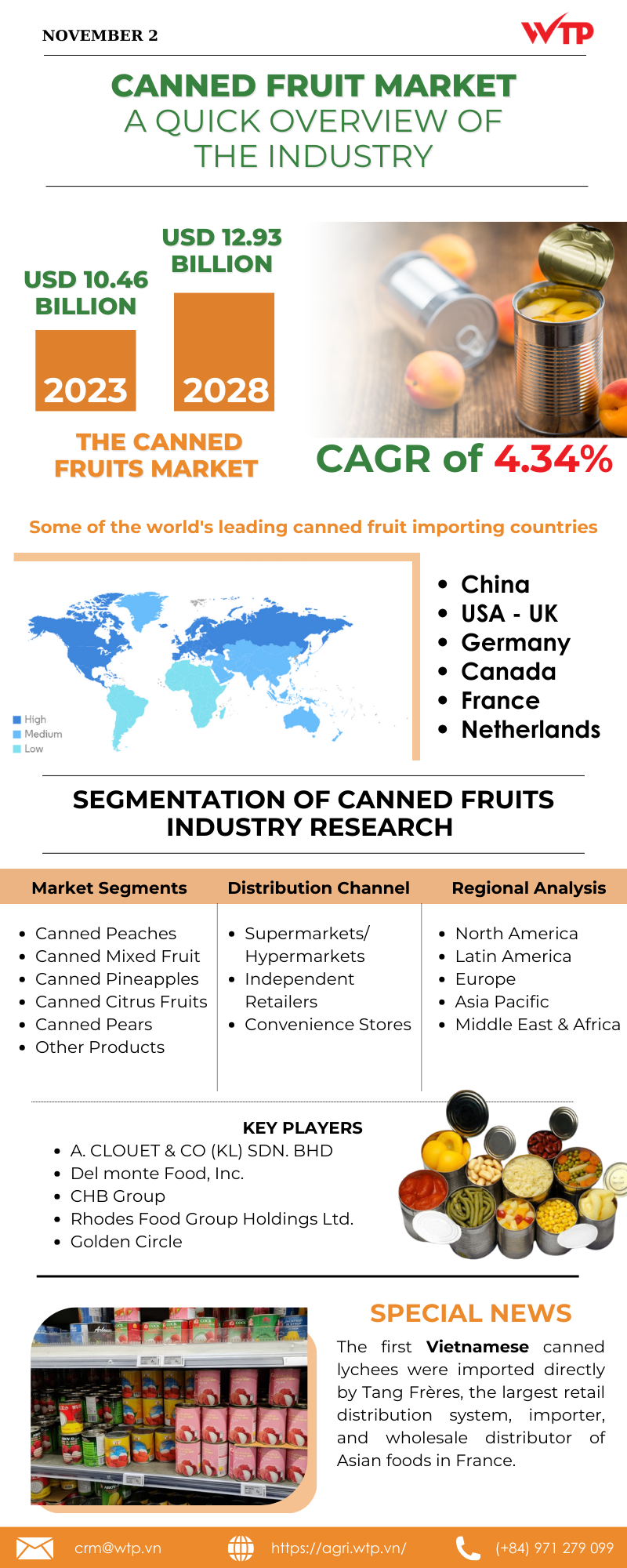
The increasing demand for healthy and convenient food choices in both developed and developing economies, driven by busy lifestyles and higher household incomes, is anticipated to drive the global market for canned fruit products. Manufacturers are actively adopting new production strategies and exploring alternative raw material sources to meet the evolving consumer demands. Stay updated with the latest news and trends in the canned fruit market by checking out the following general news! WTP Agri offers a comprehensive overview of the canned fruit market.
>>> See more: The Global Fruit Juice Market: Size, Share, Growth, and Forecast 2020-2030
Vietnam possesses great potential as a global exporter of canned fruits. The country boasts a wide variety of fruits that are well-suited for canning. Additionally, Vietnam enjoys competitive advantages with its low production costs and the ability to create high-value canned fruit products. Moreover, the government's strong support and trade integration efforts have contributed to enhancing the country's export performance. Vietnamese canned fruits are fully capable of meeting the stringent international standards for quality and quantity.
Do not hesitate to reach out to us for further insight and exploration into how we may contribute to the sustainable development of your enterprise. Contact us by filling out the contact form which you can find on this page. Either get in touch with our team at agri.crm@wtp.vn or give us a call on (+84)971 279 099. And remember we can also provide tailored service if you need it.
News Related
- Popular types of juice concentrate on the market
- The Hidden Potential of fruit juice concentrate: Benefits, Risks, and Applications
- The launch of new flavored dried fruit is a key trend in the dried fruit market
- Dried fruit market - Potential of dried fruit until 2029
- Dried fruit with new flavors: A game changer for the confectionery industry


